
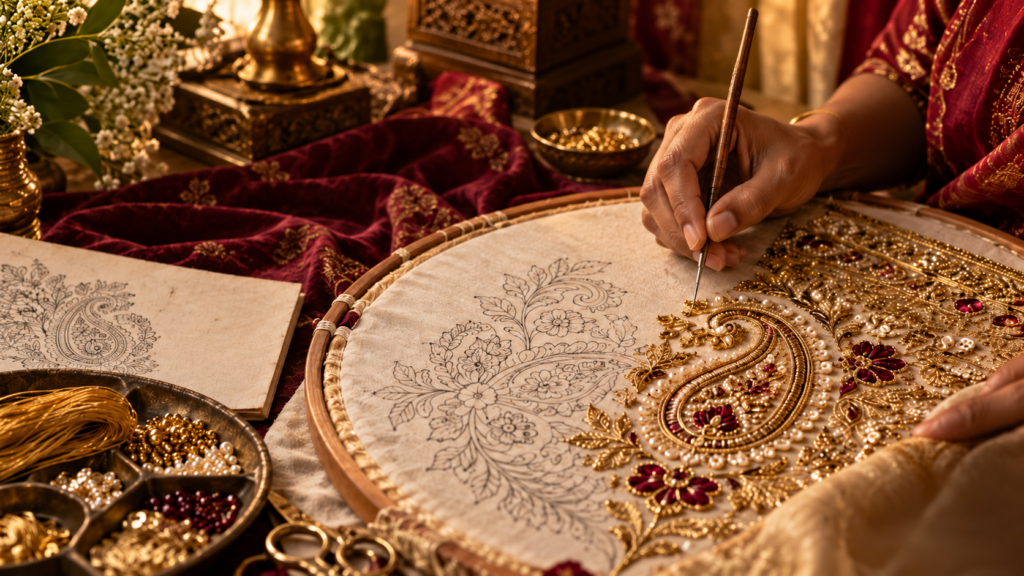
A finished piece of Aari Zardosi often looks effortless from the outside. The motifs feel balanced, the metallic details catch the light, and the embroidery seems to belong naturally on the fabric. But behind that finished beauty is a slower process, one that begins much earlier than the first stitch.
It usually begins with an idea.
Sometimes that idea comes from a bride’s outfit reference. Sometimes it comes from an old family textile, a floral pattern, a couture sketch, or a simple request like, “I want something traditional, but not too heavy.” That sounds clear at first, but embroidery needs more than inspiration. It needs planning, scale, material understanding, fabric awareness, and patience.
This is where people often start to notice the real value of hand embroidery. Aari Zardosi work is not just about adding shine to fabric. It is about translating a design into something that can live on cloth, move with the body, and still feel refined up close.
How the Idea Usually Begins
The first stage is rarely about stitching. It is about listening.
A client may have a clear vision, or they may only know the feeling they want. For bridalwear, that feeling may be regal, delicate, vintage, understated, or deeply traditional. For couture garments, the request may be more about texture, placement, and how the embroidery will support the silhouette.
This early conversation matters because hand embroidery designs are not one-size-fits-all. A motif that looks beautiful on paper may feel too dense on a soft dupatta. A heavy border may look rich in a reference image but become uncomfortable if the fabric cannot support it. A small floral detail may need to be enlarged slightly so the Zardosi elements do not look crowded.
In most cases, the clearer the discussion at the start, the smoother the work becomes later.
This is also where Aarizardosi Embroidery helps clients think through the practical side of custom work. Not every idea needs to be changed, but many ideas need to be shaped so they can work beautifully in real fabric.
Turning Inspiration Into a Sketch
Once the direction is clear, the design begins to take form through sketching. This is where the embroidery stops being a general idea and becomes a planned composition.
A sketch helps define:
- Motif shape and size
- Border width
- Placement on the garment or fabric
- Negative space
- Repetition and flow
- Areas that need heavier or lighter work
This stage is important because embroidery has rhythm. If every part of the fabric is filled with equal detail, the eye does not know where to rest. If the motifs are too far apart, the design may feel unfinished. If the border is too wide, it can overpower the outfit.
What many people don’t realize at first is that good embroidery depends as much on spacing as it does on detail. The empty areas matter. They allow the embroidery to breathe.
For designer Zardosi embroidery, the sketch also helps decide where the richer elements will sit. Metallic threads, stones, sequins, beads, dabka, nakshi, and other materials all have visual weight. Placing them carefully prevents the final piece from feeling heavy or overworked.
Choosing the Right Fabric
Fabric is not just the background. It decides what is possible.
Aari Zardosi can be done on many fabrics, but each one behaves differently. Velvet gives depth and richness, but it needs careful handling. Silk can hold detail beautifully, but the embroidery must be balanced with the fabric’s natural fall. Net and organza can look delicate, but they require lighter planning because the base is more transparent and sensitive.
This is where the decision becomes more practical. The client may love a heavy design, but the fabric may ask for something softer. Or the fabric may be strong enough for dense work, but the final outfit needs movement and comfort.
Aari Zardosi dupatta work is a good example. A dupatta needs to fall gracefully. If the border becomes too heavy, it may pull awkwardly or feel uncomfortable during long wedding functions. The embroidery has to look beautiful while still respecting how the fabric will be worn.
That balance is not accidental. It is part of the process.
Selecting Threads, Metallics, and Embellishments
After the design and fabric direction are clear, the materials are selected. This may include silk threads, zari, beads, sequins, pearls, cutdana, dabka, nakshi, stones, or other embellishments depending on the style of work.
Material selection can change the entire mood of a piece.
Soft antique gold feels very different from bright yellow gold. Silver can feel modern or ceremonial depending on the fabric. Pearls add softness. Beads create texture. Sequins bring light, but too many can make the work feel flat or overly shiny.
It may sound simple, but it matters more than people think.
A good embroidery piece is not created by using every beautiful material available. It is created by choosing the right combination. The materials must support the design, not compete with it.
This is especially important in Aari Zardosi fabric art, where the final piece may be used beyond clothing, such as decorative panels, luxury textiles, or custom statement pieces. The embroidery must feel complete, balanced, and durable in its final purpose.
Preparing the Fabric for Work
Before the first stitch is made, the fabric is prepared and secured. Traditionally, the fabric is stretched on a frame so the surface stays firm and even while the artisans work.
This step affects the quality of the embroidery. If the fabric is loose, the stitches may not sit properly. If it is stretched too tightly, delicate fabric can become strained. The goal is to create the right tension so the embroidery can be done cleanly.
The design is then transferred onto the fabric. This may be done through tracing, marking, or other careful transfer methods depending on the fabric and design type.
This is a quiet stage, but it matters. A small alignment issue at the beginning can become much more visible once the embroidery is complete. Borders must be straight. Motifs must be placed correctly. Repeated patterns must stay consistent.
Good preparation protects the final result.
The Stitching Begins Slowly
The stitching stage is where the design begins to feel alive. Aari work is known for its fine hooked needle technique, while Zardosi adds dimension through metallic and ornamental elements.
At first, the progress may seem slow. The outlines are formed. The main shapes begin to appear. Then the filling, layering, and embellishments come in gradually. A good artisan is not simply following lines. They are constantly judging tension, spacing, density, and texture.
This is why handmade work has a different feeling from machine embroidery. There is a human decision in each section. If a curve needs softness, the stitch changes slightly. If a motif needs emphasis, the material may be layered more carefully. If a section begins to feel too dense, the artisan adjusts before it overwhelms the design.
Hand embroidery designs carry this kind of judgment. They are planned, but they are also guided by experience as the work develops.
Checking Balance During the Process
Aari Zardosi work is usually reviewed as it progresses. This is important because embroidery can look different once it is actually on fabric.
A motif that seemed light in the sketch may feel heavier after metallic work is added. A border may need a small adjustment. A repeated pattern may need more breathing space. In some cases, the design may stay exactly as planned. In others, careful refinement improves the final piece.
This is where experience matters.
Rushed embroidery often shows in the finishing. Uneven spacing, loose threads, overcrowded embellishment, or poor alignment can make even expensive materials look careless. Good work requires checking, correcting, and sometimes slowing down.
That patience is part of the craft.
Finishing Makes the Difference
Once the embroidery is complete, the finishing begins. Loose threads are secured. The back of the work is checked. The fabric is handled carefully so the embroidery is protected. If the piece is part of a garment, it may then move into cutting, stitching, lining, or final construction.
For hand embroidered accessories, finishing is especially important because the piece may be touched, carried, or worn more frequently. A potli bag, belt, clutch panel, scarf edge, or decorative accessory needs embroidery that is beautiful but also properly secured.
The final look depends on the small details people may not notice immediately. Clean edges. Comfortable weight. Smooth backing where needed. Embellishments that sit properly. No unnecessary stiffness.
A finished piece should not only look impressive in photos. It should feel thoughtfully made when held, worn, or used.
Why Timelines Should Be Realistic
Aari Zardosi is slow because it is handmade. That does not mean every piece takes months, but it does mean clients should allow proper time for planning, designing, material selection, stitching, reviewing, and finishing.
Timeline pressure is one of the most common reasons embroidery projects become stressful. In most cases, delays become harder to manage when decisions are made too late or when small details were never discussed at the beginning.
For bridal work, this matters even more. Outfits often need trials, styling, shipping, matching accessories, and final adjustments. If embroidery is rushed, quality can suffer.
A realistic timeline gives the work room to be done properly.
What Clients Should Think About Before Ordering
Before starting custom Aari Zardosi work, it helps to be clear about a few practical things.
Think about:
- The purpose of the piece
- The fabric you want to use
- How heavy or light the embroidery should feel
- Whether the design is for bridalwear, couture, accessories, or fabric art
- The date by which the piece is needed
- Any references, colors, or motifs that matter personally
You do not need to know every technical detail. That is what the embroidery team is there to guide. But having a clear starting point helps the process feel more organized and less uncertain.
Aarizardosi Embroidery works with clients who want this kind of thoughtful approach, especially when the embroidery needs to feel personal, refined, and connected to a specific garment or occasion.
FAQs
How does Aari Zardosi work begin?
It usually begins with a design discussion, reference images, fabric choice, and a sketch that guides the embroidery placement and style.
Can Aari Zardosi be done on any fabric?
It can be done on many fabrics, but not every fabric supports every design. Heavier embroidery needs a stronger or better-prepared base.
How long does custom Aari Zardosi work take?
The timeline depends on design size, detail, materials, and finishing needs. Detailed bridal or couture work usually needs more planning time.
Is Aari Zardosi suitable for dupattas?
Yes, but the embroidery weight must be planned carefully so the dupatta still drapes comfortably and does not feel too heavy.
Can accessories be made with Aari Zardosi embroidery?
Yes. Aari Zardosi can be used for clutches, potli bags, belts, scarves, panels, and other hand embroidered accessories.
Final Thoughts
Aari Zardosi work is not created in one step. It moves slowly from idea to sketch, from sketch to fabric, and from fabric to stitch. Each stage affects the final piece, which is why thoughtful planning matters as much as skilled embroidery.
The beauty of this craft is in the details. The spacing, the material choices, the hand movement, the fabric behavior, and the finishing all come together to create something that feels intentional.
For clients who want hand embroidery designs that feel personal and carefully made, Aarizardosi Embroidery offers a guided way to explore the process with clarity. The best starting point is simple. Bring the idea, the purpose, and the feeling you want the piece to carry. The stitches can grow from there.